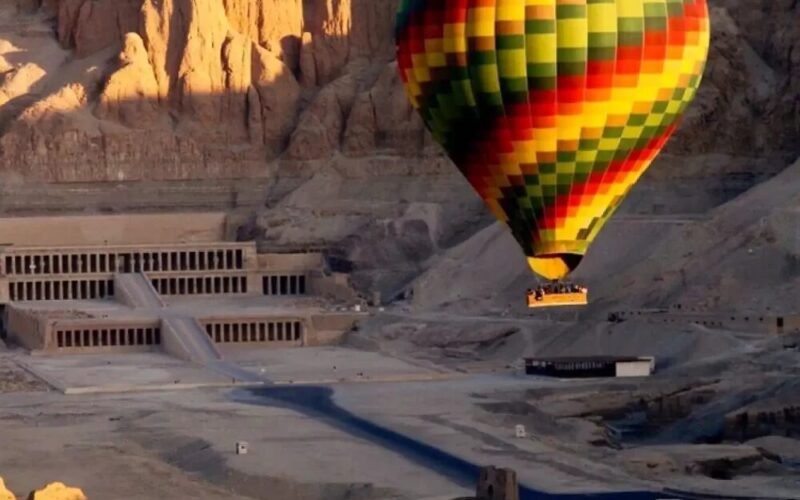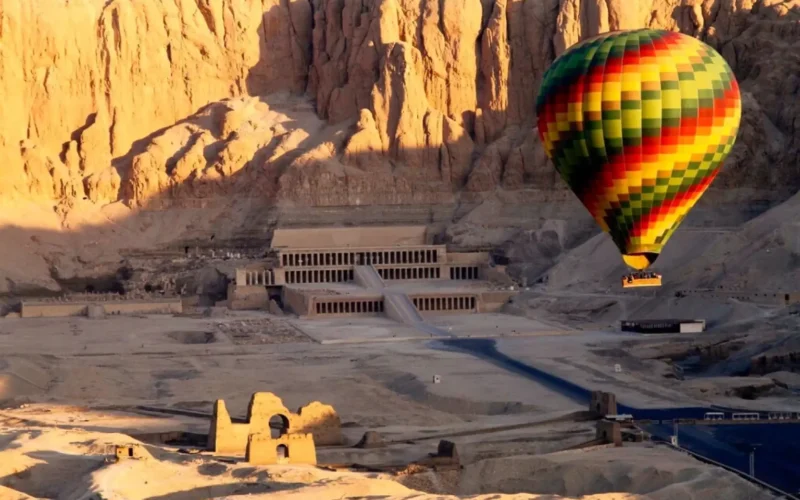

On the road from the Nile to the Valley of the Kings, two enormous seated figures sit alone in the fields. From a balloon at sunrise they cast long shadows across the farmland, and you can finally see what the ground hides: the outline of the vast temple they once guarded. These are the Colossi of Memnon.
Who are they?
Despite the name, they have nothing to do with Memnon. Both statues depict Amenhotep III, a pharaoh of the 18th Dynasty who ruled at the height of Egypt’s wealth in the 14th century BC. Each is carved from quartzite sandstone and stands roughly 18 metres tall, including the base. Smaller figures of his wife, Queen Tiye, and his mother stand beside his legs.
What were they guarding?
The colossi stood at the entrance of Amenhotep III’s mortuary temple, which may have been the largest temple ever built in Thebes — bigger even than Karnak in its day. It was built close to the river’s flood plain, and over centuries the Nile floods and later builders reusing its stone left little standing. Archaeological teams have been excavating and re-erecting statues on the site for years, and the outline of the temple is clearer from the air than from the road.
Why are they called “Memnon”?
After an earthquake damaged one statue in antiquity, it began to make a sound at dawn — probably caused by the stone warming and the cracked structure releasing moisture. Greek visitors linked it to Memnon, a mythical hero who greeted his mother, Eos, goddess of the dawn. The “singing statue” became one of the great tourist attractions of the Roman world, and visitors carved inscriptions into its legs that you can still see. After a Roman repair in the early centuries AD, the sound stopped.
Seeing them from a hot air balloon
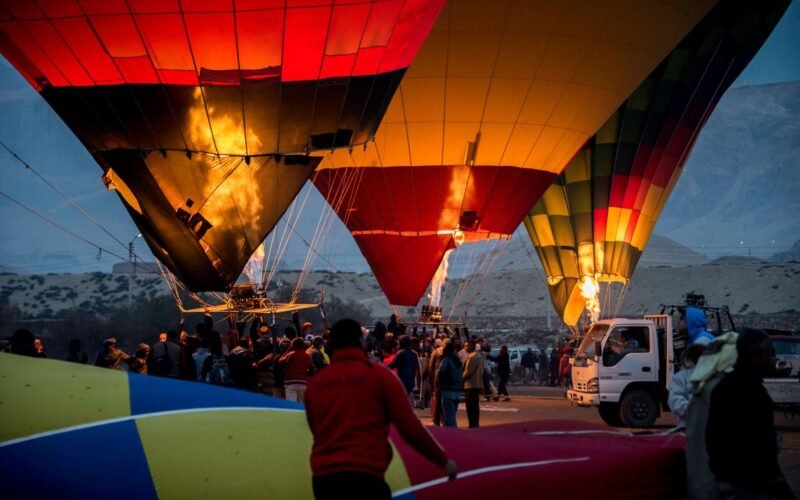
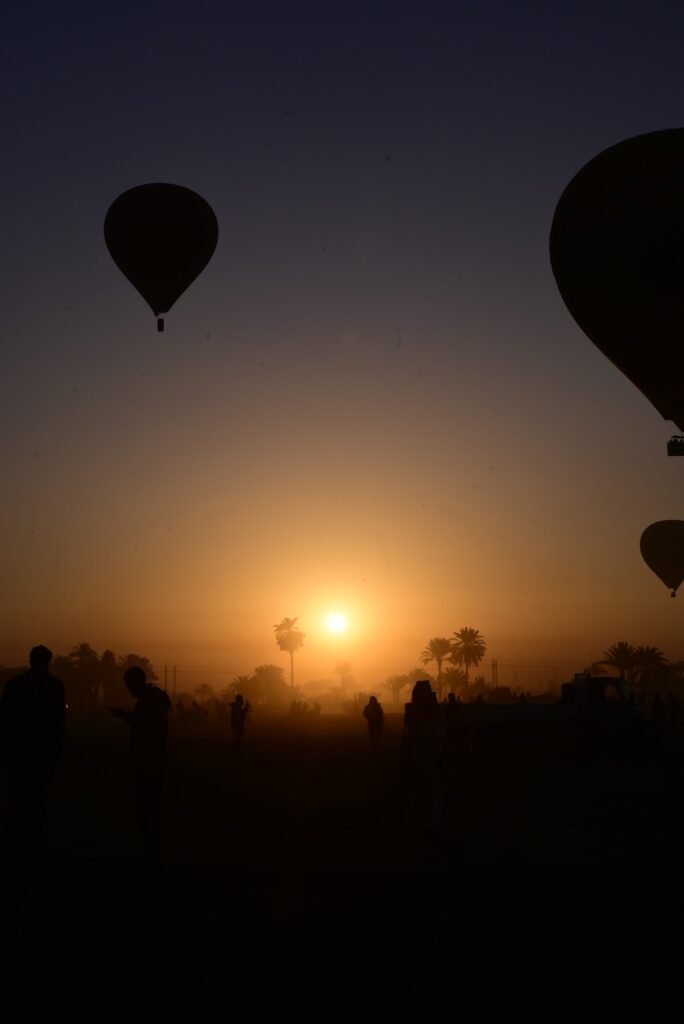
On many mornings the balloons pass within view of the colossi soon after take-off, because the launch fields lie in the same farmland. Look for:
- The two figures facing east towards the Nile and the rising sun
- Their long morning shadows stretching west across the fields
- The rectangular excavation area of the temple behind them
- The road leading on towards Medinet Habu and the Theban hills
The exact route depends on the wind. Our guide to what you see from a balloon explains the usual order of landmarks.
Visiting on foot
- Free to view from the roadside, with no ticket needed.
- Allow 15 minutes. Most tours stop here briefly on the way to or from the Valley of the Kings.
- Best light: early morning, when the sun is on their faces.
- Combine it with Medinet Habu, a few minutes away, and the Temple of Hatshepsut.
Our Hot Air Balloon + Valley of the Kings tour includes the colossi after the flight.
Frequently asked questions
How tall are the Colossi of Memnon?
Around 18 metres including their bases.
Do the Colossi of Memnon still sing?
No. The sound stopped after Roman-era repairs to the damaged statue.
Do I need a ticket?
No, the colossi are visible from the roadside without a ticket.