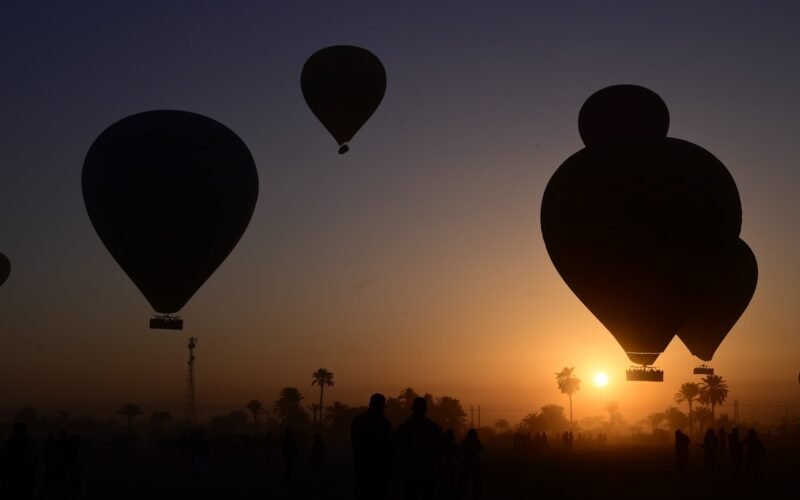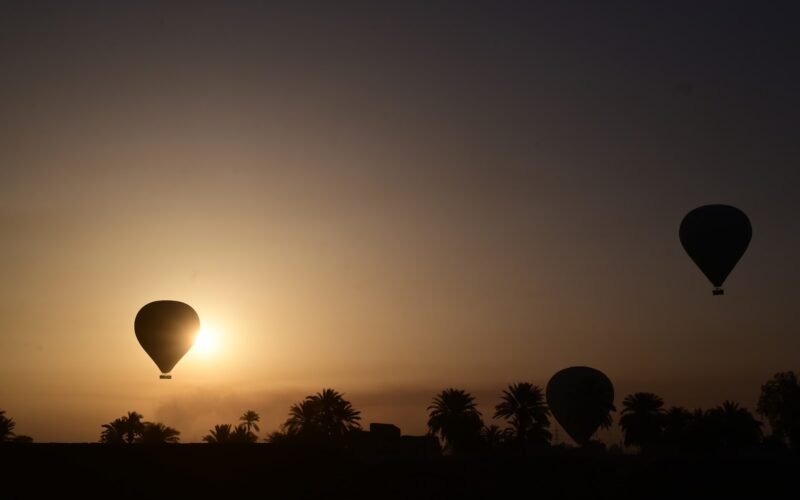
A hot air balloon is the oldest form of human flight — the first crewed flight was in Paris in 1783 — and still one of the simplest. There is no engine, no wing and no steering wheel. Here is how it works, what it is made of, and how our pilots use it to fly over Luxor every morning.
The principle in one sentence
Hot air is lighter than cold air, so a large bag of hot air rises, carrying a basket with it. Heating the air inside the envelope makes it less dense than the cooler air outside; the difference creates lift. That is also why balloons fly at dawn: cool morning air gives more lift and calmer conditions.
The main parts
| Part | What it is | What it does |
|---|---|---|
| Envelope | The fabric “balloon”, usually ripstop nylon or polyester, with heat-resistant fabric near the bottom | Holds the hot air |
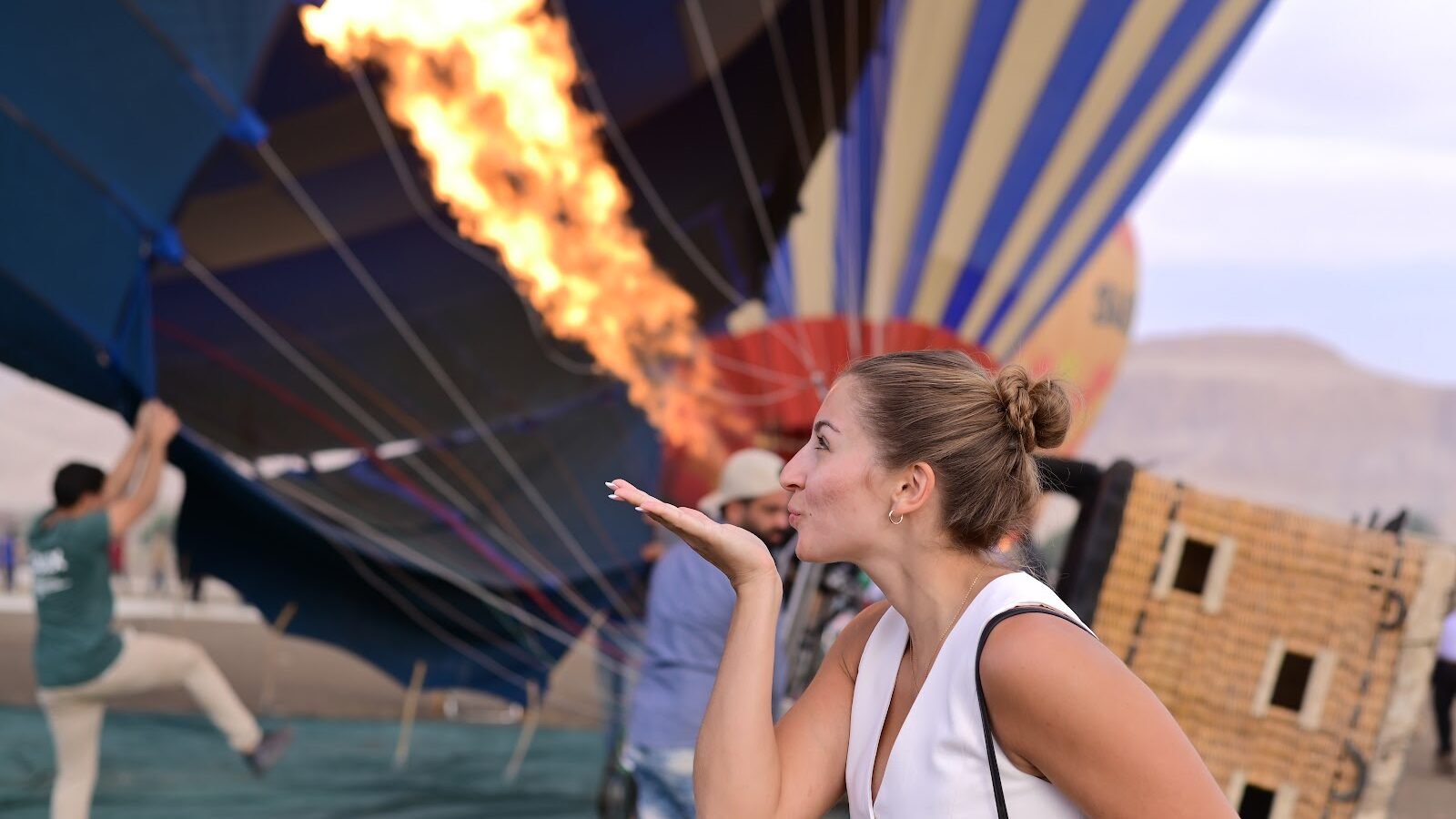
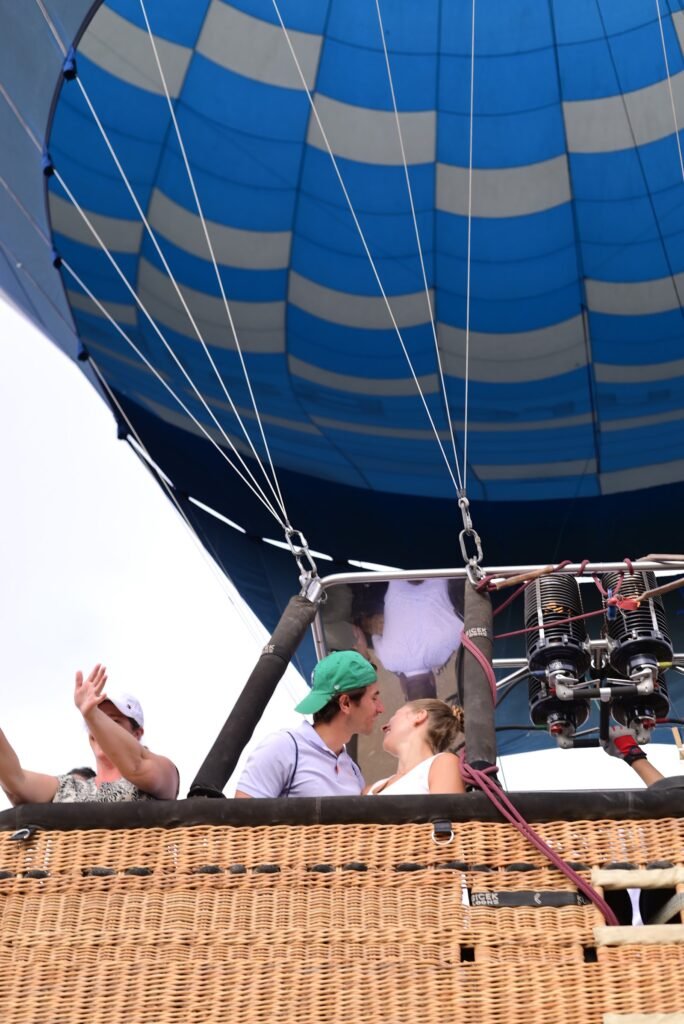
| Burner | Twin or quad burners fed with liquid propane | Heats the air inside the envelope |
| Fuel cylinders | Propane tanks carried in the basket | Supply the burners |
| Basket | Woven wicker or rattan on a frame, often divided into compartments | Carries pilot and passengers; wicker flexes on landing |
| Parachute vent | A panel at the top of the envelope, opened by a line | Releases hot air to descend and deflate after landing |
How the pilot controls it
- Up: fire the burner to heat the air. You hear the roar and feel the warmth.
- Down: let the air cool, or open the vent briefly.
- Direction: a balloon cannot steer. Wind blows in different directions at different heights, so the pilot climbs or descends to find the layer heading where they want to go. Over Luxor that usually means a drift northwards over the necropolis.
How high and fast?
Over Luxor, flights generally range from about 300 to 2,000 feet above the ground. Speed equals the wind speed — usually gentle at dawn — which is why the ride feels calm. Because the balloon moves with the air, there is almost no breeze in the basket.
Why the landing is the busiest moment
The pilot chooses an open field, descends, and the chase crew arrives to help. Passengers adopt the landing position: knees bent, holding the handles, back to the direction of travel. Read more in what happens on a balloon morning.
Quick hot air balloon facts
- The first crewed hot air balloon flight was by the Montgolfier brothers’ balloon in Paris, 1783.
- Commercial passenger balloons can be huge, with envelopes holding hundreds of thousands of cubic feet of air.
- Balloons are aircraft: pilots are licensed and balloons are inspected like other aircraft. In Egypt that is overseen by the Egyptian Civil Aviation Authority.
- Luxor has hosted commercial balloon flights since the late 1980s.
For safety questions, read Is hot air ballooning in Luxor safe? and who can fly.
Frequently asked questions
What fuel does a hot air balloon use?
Liquid propane, carried in cylinders in the basket.
Can a hot air balloon be steered?
Only indirectly. The pilot changes height to find winds blowing in different directions.
Why do hot air balloons fly in the morning?
Morning air is cooler, which gives more lift, and calmer, because the sun has not yet heated the ground and created wind.